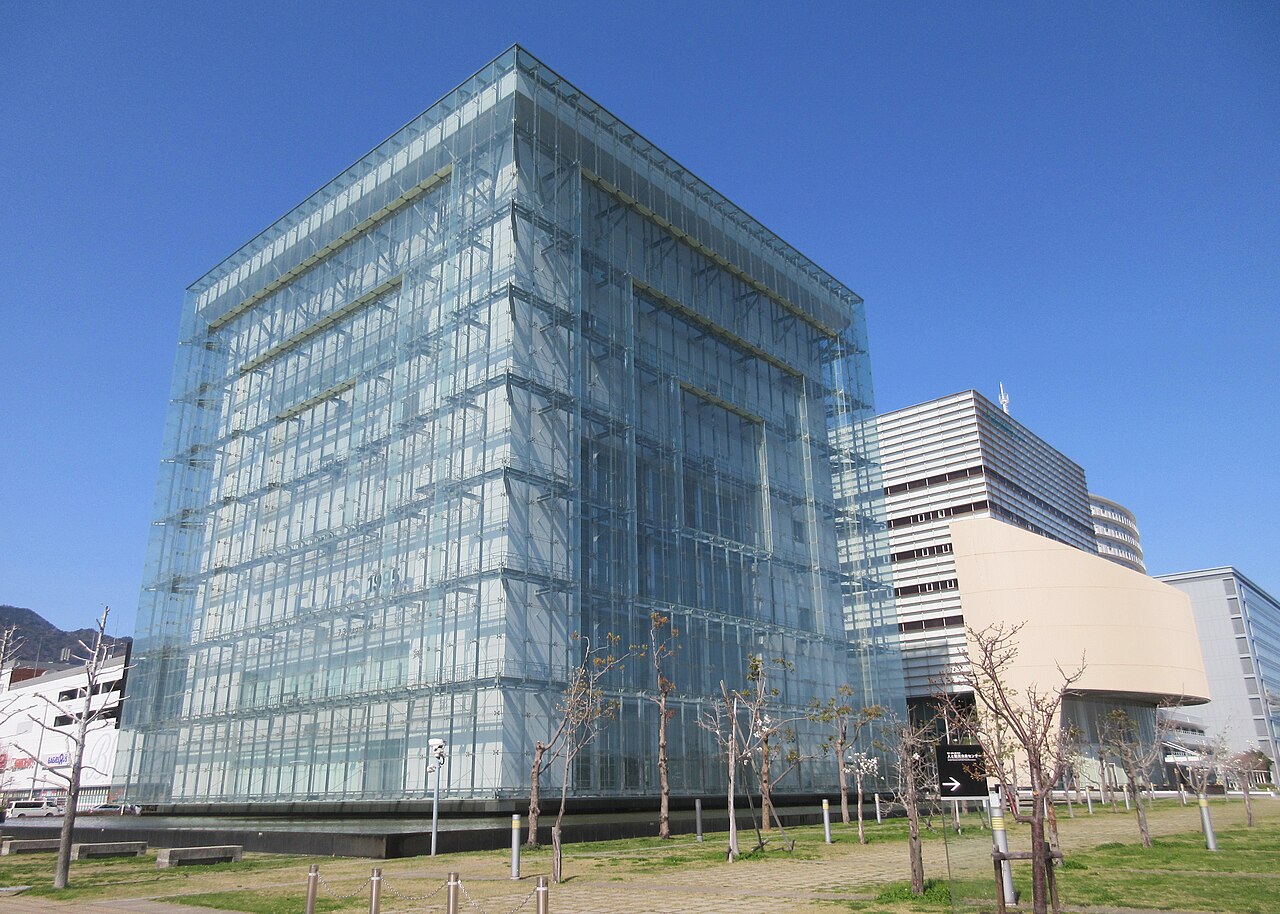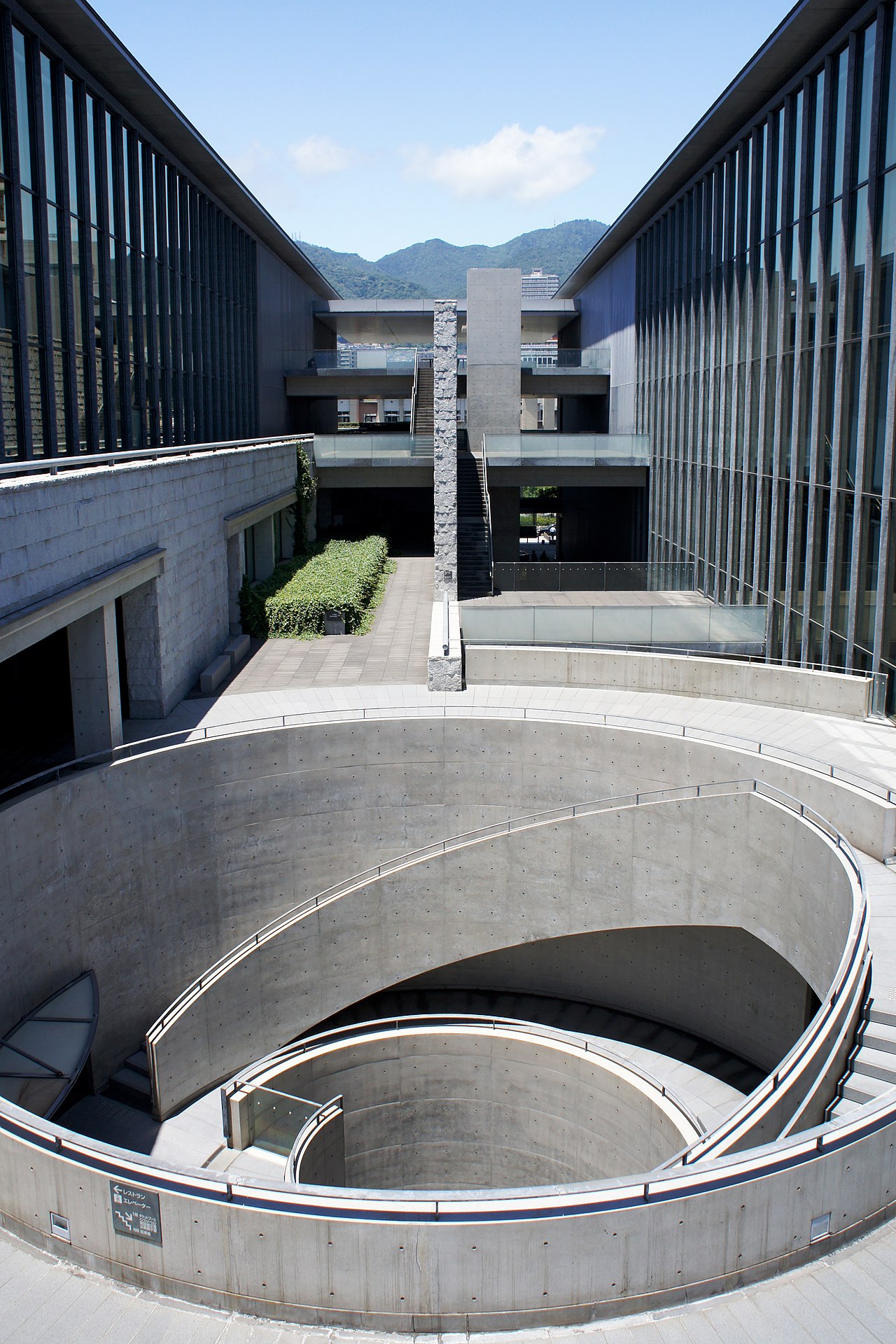
Western Japan's largest art museum, a landmark concrete-and-glass building by architect Tadao Ando on the Kobe waterfront.
The Hyogo Prefectural Museum of Art is as celebrated for its building as for its collection. Designed by Pritzker Prize-winning architect Tadao Ando and opened in 2002, it stands on reclaimed land at HAT Kobe, part of the city's rebuilding after the 1995 Great Hanshin earthquake. Ando conceived it as a symbol of recovery and cultural renewal, and its stacked cubes of exposed concrete, glass and stone step down toward the sea in a composition that rewards slow exploration.
As the largest art museum in western Japan, it holds a broad permanent collection strong in modern and contemporary sculpture and painting, including works by Kobe-connected artists and a notable body of prints and sculpture by figures such as Ryohei Koiso and international modernists. But most visitors come as much for the architecture: the interlocking galleries are linked by Ando's signature devices — long ramps, floating staircases, and a dramatic outdoor spiral stair that climbs the seaward facade and frames views of Osaka Bay through geometric openings. A giant green apple sculpture, inspired by a Samuel Ullman poem about staying young, has become a beloved photo spot on the terrace.
The museum hosts ambitious special exhibitions throughout the year, often major touring shows of European or Japanese masters, and these fill the largest galleries on the upper floors. A separate 'Ando Gallery' documents the architect's work with models and drawings, a fitting tribute inside one of his own buildings. Natural light, controlled and channelled through Ando's concrete slots, changes the mood of the interior hour by hour; late afternoon, when the low sun crosses the bay, is especially atmospheric.
The setting adds to the appeal. HAT Kobe is a planned waterfront district built after the earthquake, and the museum sits beside the Disaster Reduction and Human Renovation Institution, so the two can easily be combined into a single half-day of art and remembrance. A promenade along the water links the buildings, and there is a pleasant cafe and a well-stocked design shop inside.
Practically, the museum is a short walk from Iwaya Station on the Hanshin Main Line, or a slightly longer walk from JR Nada; a community bus also loops through HAT Kobe. Note that because the nearest stations are on the private Hanshin and connecting lines rather than the JR trunk, a Japan Rail Pass does not fully cover the approach, though an IC card works everywhere. The building is fully accessible, with lifts serving every level and step-free routes despite its many changes of level.
Allow ninety minutes to two hours, and give yourself time simply to wander the ramps and terraces even if you do not enter every gallery — Ando intended the architecture itself to be experienced as art. For anyone interested in contemporary Japanese design, this is one of the essential buildings on the Kansai coast, and its combination of serious art, sea views and world-class architecture makes it a standout among Kobe's cultural attractions.
A local's tip
Climb to the rooftop and the outdoor spiral staircase for a free sculpture of Tadao Ando's concrete geometry framing the Inland Sea — and look for the giant green apple installation.
Best time to visit
Late afternoon for sea light
Getting there
From Iwaya Station on the Hanshin line, walk about 8 minutes south toward the waterfront at HAT Kobe; from JR Nada Station it is roughly 18 minutes on foot.
Good to know
- Cafe
- Wi-Fi
- Restrooms
- Museum shop
- Wheelchair access
Plan the whole trip offline
Hyogo Prefectural Museum of Art is one of many places in the Real Japan app — with turn-by-turn directions, nearby spots and full offline maps you can use with no signal.