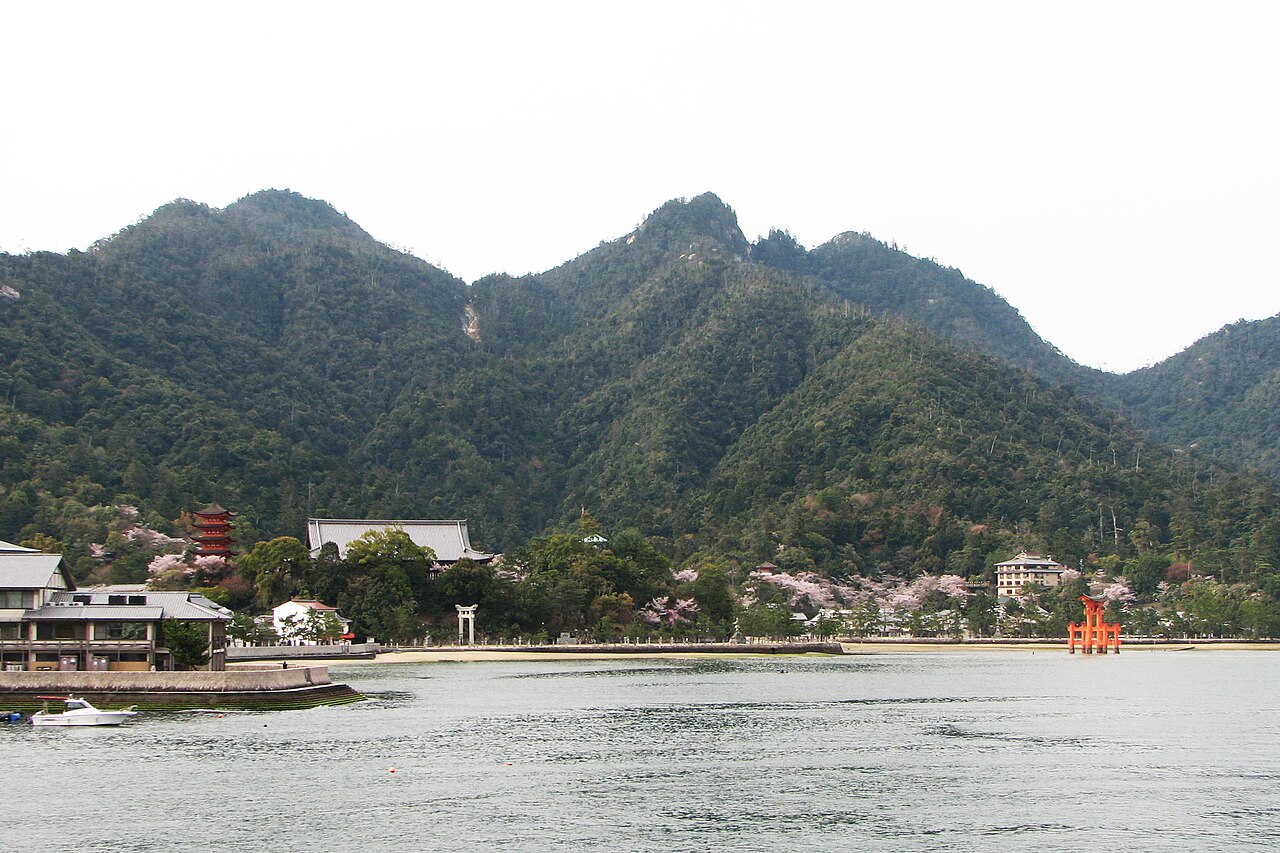
A vast open-sided wooden hall begun by Toyotomi Hideyoshi in 1587, nicknamed the Hall of a Thousand Tatami Mats.
Senjokaku, whose name means the Hall of a Thousand Tatami Mats, is the largest wooden building on the sacred island of Miyajima and one of its most atmospheric yet least crowded sights. It stands on a low rise just above the famous Itsukushima Shrine, an enormous open-sided pavilion of massive timber pillars supporting a sweeping grey roof, with no walls at all, so that sea breezes pass straight through it. Officially it is the main hall of Toyokuni Shrine, but everyone knows it by its evocative nickname, earned from its cavernous plank floor said to be spacious enough to lay out a thousand tatami mats.
The hall was commissioned in 1587 by Toyotomi Hideyoshi, the great warlord who had unified much of Japan, who ordered the priest Ankokuji Ekei to build a great sutra hall where Buddhist scriptures could be chanted every month for the souls of those killed in his military campaigns. It was conceived on a grand scale to match Hideyoshi's ambitions. But when he died in 1598 the building was left unfinished, and it remains so to this day: it has no proper front entrance, no ceiling boards, and the raw underside of the roof is fully visible overhead, giving the interior a raw, skeletal grandeur quite unlike the polished shrines around it. In 1872, in the early Meiji period, the incomplete hall was rededicated as a shrine to the spirit of its founder Hideyoshi, which remains its religious function.
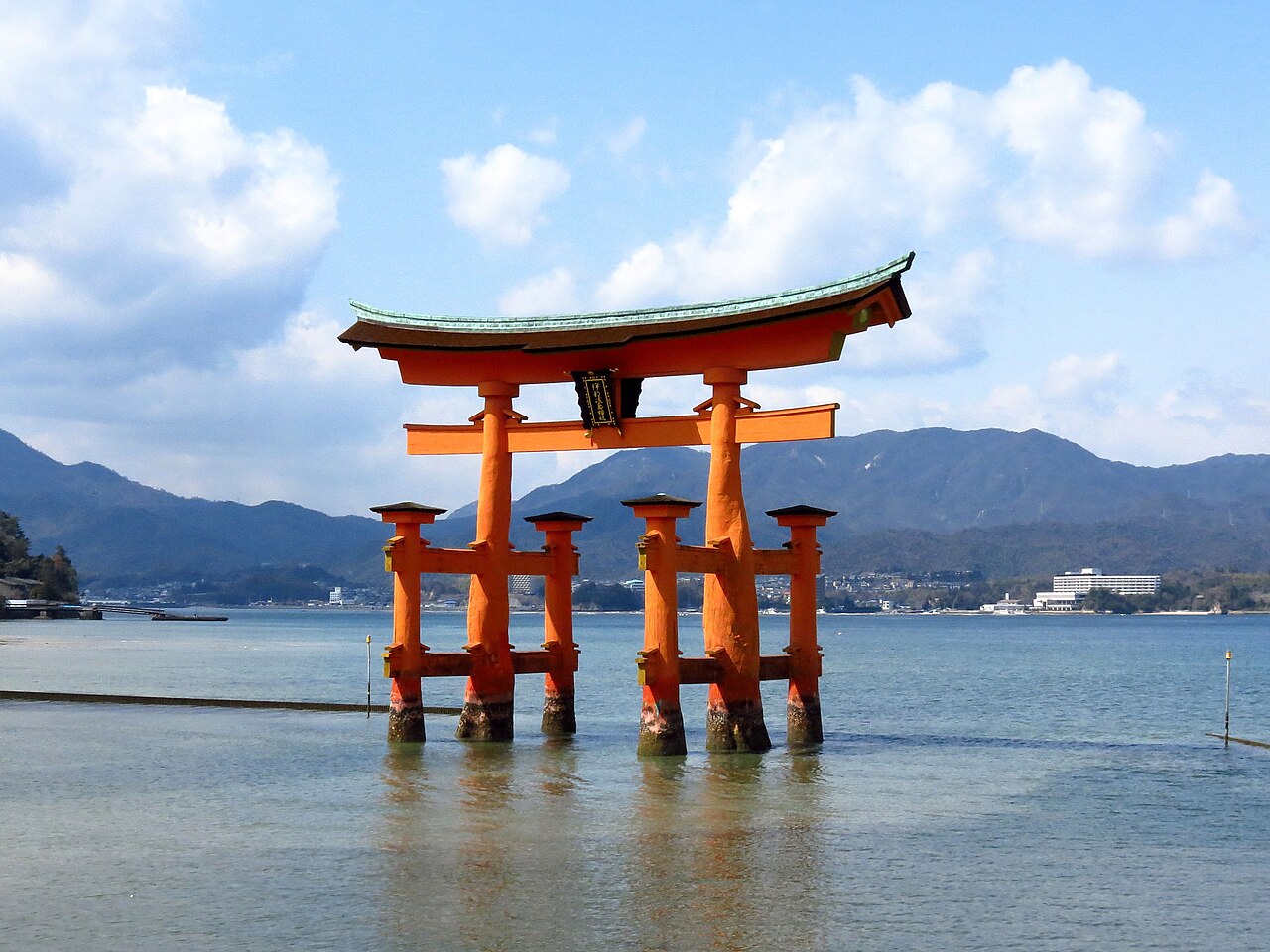
Inside, the immense empty floor is hung with old votive paintings and boards, and rice scoops and other offerings left by generations of pilgrims. Because it is open on every side, the hall frames constantly shifting views of the treetops, the vermilion five-storey pagoda that stands immediately beside it, the roofs of Itsukushima Shrine below, and the Inland Sea beyond. Visitors remove their shoes and are free to sit on the worn boards, and the combination of shade, sea air and quiet makes it a wonderful place to rest away from the crowds that throng the waterfront shrine and the floating torii gate.
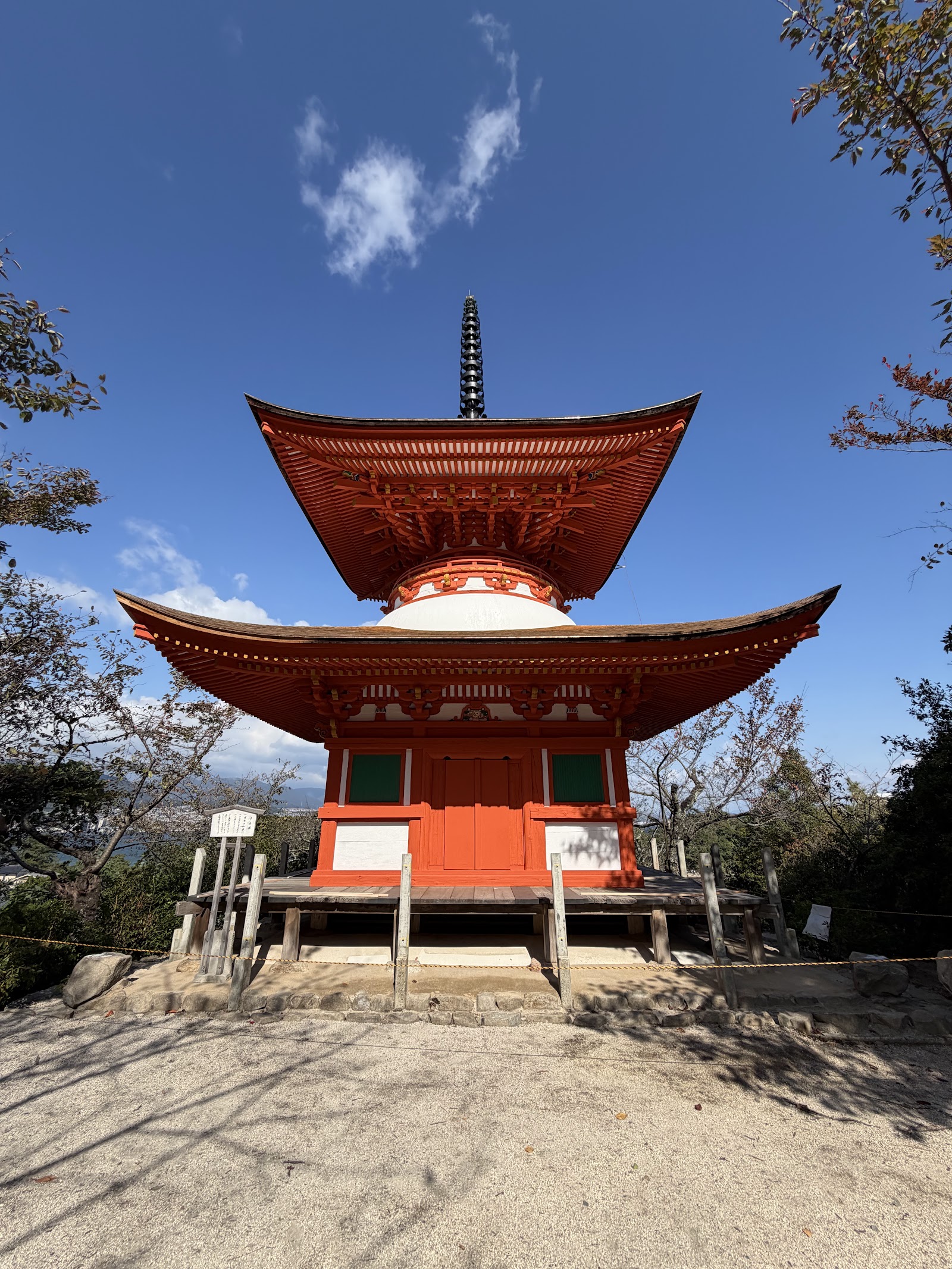
Adjacent to Senjokaku rises the brilliantly coloured Goju-no-to, a five-storey pagoda dating from 1407 that blends Japanese and Chinese architectural styles and predates the hall itself; the two structures together make one of the most photographed compositions on the island, especially in autumn when the maples on the hillside turn crimson.
The hall keeps daytime hours and charges only a token entry fee, and it sits about a fifteen-minute walk from the Miyajima ferry pier, reached from the mainland by the JR ferry that is covered by the Japan Rail Pass. There are a few steps up to the raised floor, but the approach is gentle. Combined with Itsukushima Shrine, the pagoda and the island's tame deer, Senjokaku completes a half-day of history and beauty on one of Japan's most celebrated islands.
A local's tip
Sit on the open plank floor with your shoes off and look out through the pillars over Itsukushima Shrine and the sea; it is the most peaceful, least crowded spot on the whole island.
Best time to visit
Late afternoon, with autumn colour on the hillside
Getting there
Take the JR Sanyo Line to Miyajimaguchi, then the JR ferry to Miyajima; from the pier walk about 15 minutes toward Itsukushima Shrine and climb the short rise to the hall.
Good to know
- Restrooms
- Shoes Off
Plan the whole trip offline
Senjokaku (Toyokuni Shrine) is one of many places in the Real Japan app — with turn-by-turn directions, nearby spots and full offline maps you can use with no signal.