A love shrine hidden in the Umeda backstreets, immortalized by a famous puppet play about two lovers' 1703 double suicide.
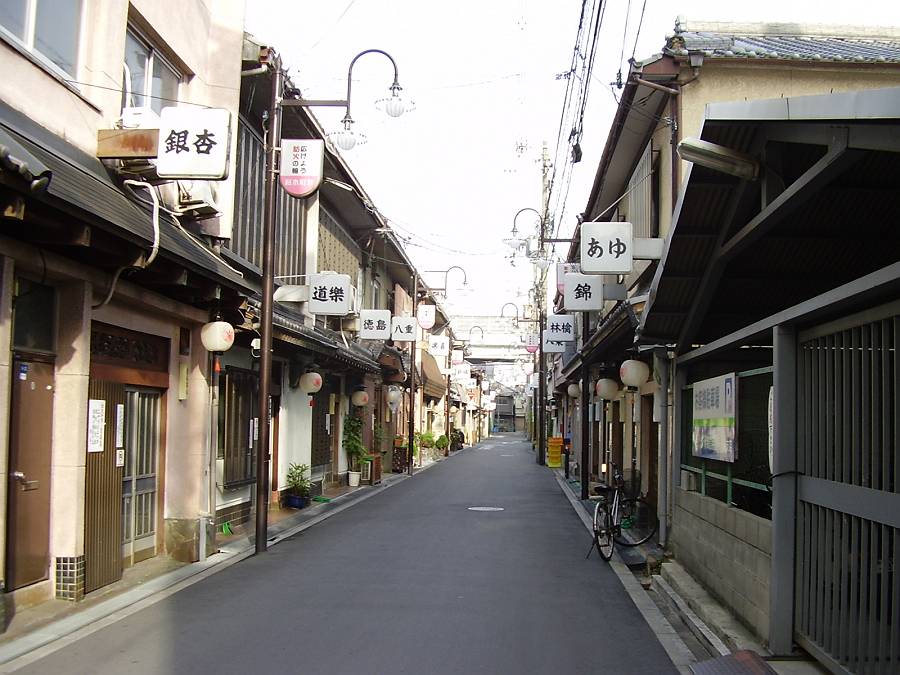
Tucked improbably among the bars, pachinko parlors and office towers of the Sonezaki district behind Osaka's Umeda hub, Tsuyu no Tenjinsha, universally known as Ohatsu Tenjin, is one of the city's most atmospheric surprises: an ancient shrine, over a thousand years old, that has become Osaka's shrine of love. Finding it, wedged into the neon backstreets, is half the pleasure.
The shrine's formal history reaches back roughly twelve centuries. Its principal deity is Sukunahikona, joined by Tenjin, the deified scholar Sugawara no Michizane, whose exile is echoed in the shrine's poetic name; Tsuyu no Tenjinsha can be read as the shrine of the dew of heaven, a reference to a farewell poem. For most of its long life it was a locally important but unremarkable Tenjin shrine. Its fame today rests on a tragedy and the masterpiece it inspired.
In 1703, a soy-sauce shop clerk named Tokubei and a courtesan named Ohatsu, forbidden to marry and cornered by debt and dishonor, are said to have come to the wooded grounds of this shrine and taken their own lives together, choosing to die united rather than live apart. Within weeks the great playwright Chikamatsu Monzaemon dramatized their story as Sonezaki Shinju, The Love Suicides at Sonezaki, for the bunraku puppet theater. It became a sensation, so influential that it reportedly triggered a wave of copycat suicides and eventually official bans on the genre. The play remains a cornerstone of Japanese theater, and its heroine gave the shrine its popular name, Ohatsu Tenjin.
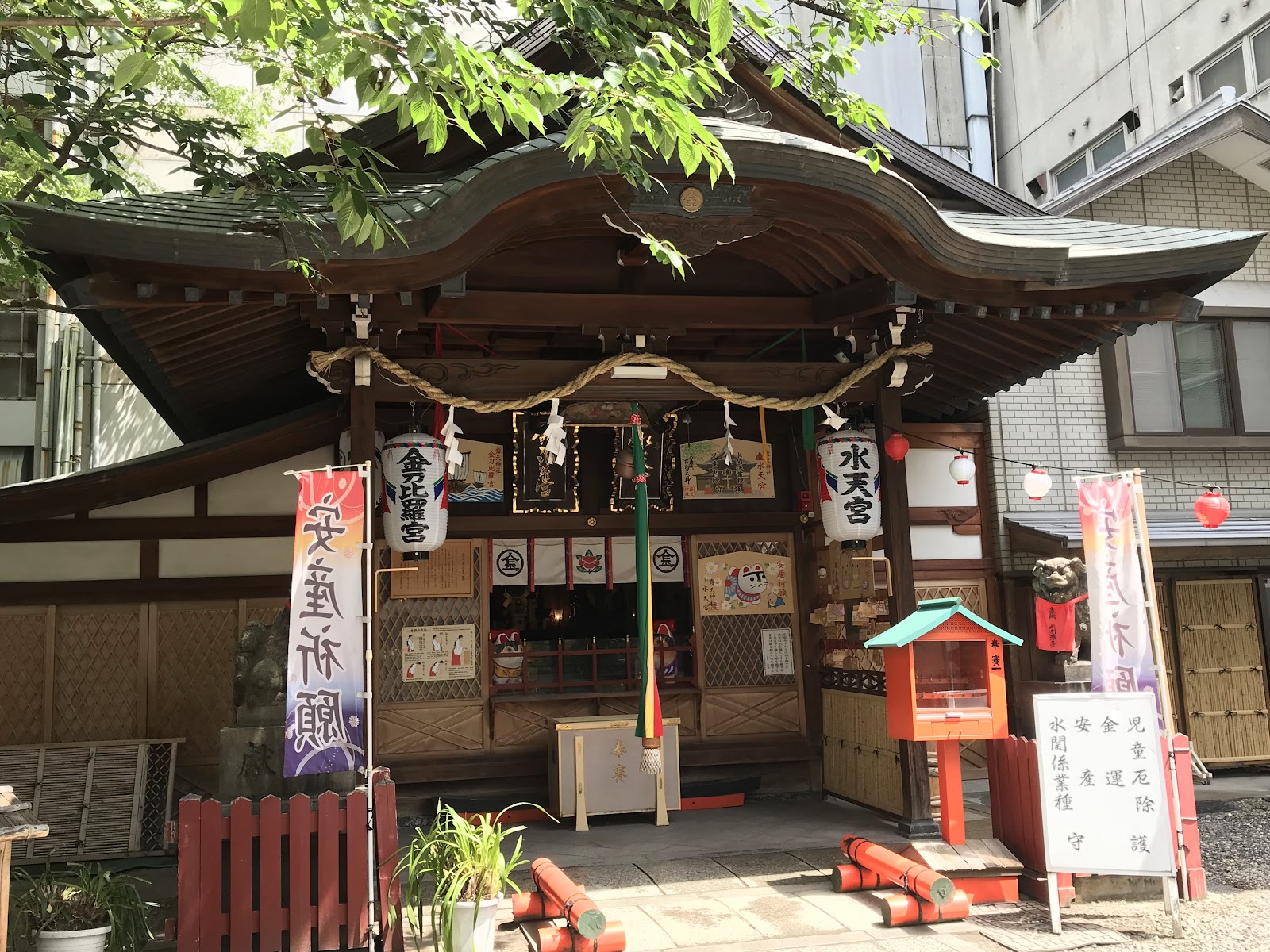
Because of that story, the shrine has been embraced as a place to pray for love and lasting relationships. A bronze statue group of Ohatsu and Tokubei stands in the grounds, and couples come to tie ema plaques, many shaped like the courtesan's face, wishing for enduring romance and good matchmaking. There is something poignant about a shrine that turns a four-hundred-year-old double suicide into a blessing for living lovers, and that bittersweet layer is exactly what sets it apart from Osaka's grander sites.
A visit is short but rich in mood. The compact grounds hold the main hall, the lovers' statue, sub-shrines and rows of heart-shaped and face-shaped ema, all pressed close by the surrounding city. On the first Friday of most months an antiques and flea market sets up along the approach, a good excuse to browse. The shrine is open from early morning until midnight, a rarity that makes it a fine, quiet stop after an evening in Umeda. The level grounds are easy for all, with restrooms and a charm stall on site.
Getting there means diving off the polished concourses of Umeda into its older, grittier backstreets. From the huge Osaka-Umeda complex, served by JR, the Midosuji subway and the Hankyu and Hanshin railways, walk about seven minutes southeast into Sonezaki and watch for the torii among the storefronts. Allow twenty-five minutes, longer if you catch the market or want to sit a while with the strange, tender history of the place.
A local's tip
Look for the bronze statues of the doomed lovers Ohatsu and Tokubei; couples come here to pray for lasting love and matchmaking.
Best time to visit
Any time; the flea market runs on the first Friday of the month
Getting there
From the vast Osaka-Umeda station complex walk about 7 minutes southeast into Sonezaki; the shrine hides among the bars and shops of Kita-ku.
Good to know
- Restrooms
- Charm stall
Plan the whole trip offline
Ohatsu Tenjin (Tsuyu no Tenjinsha) is one of many places in the Real Japan app — with turn-by-turn directions, nearby spots and full offline maps you can use with no signal.