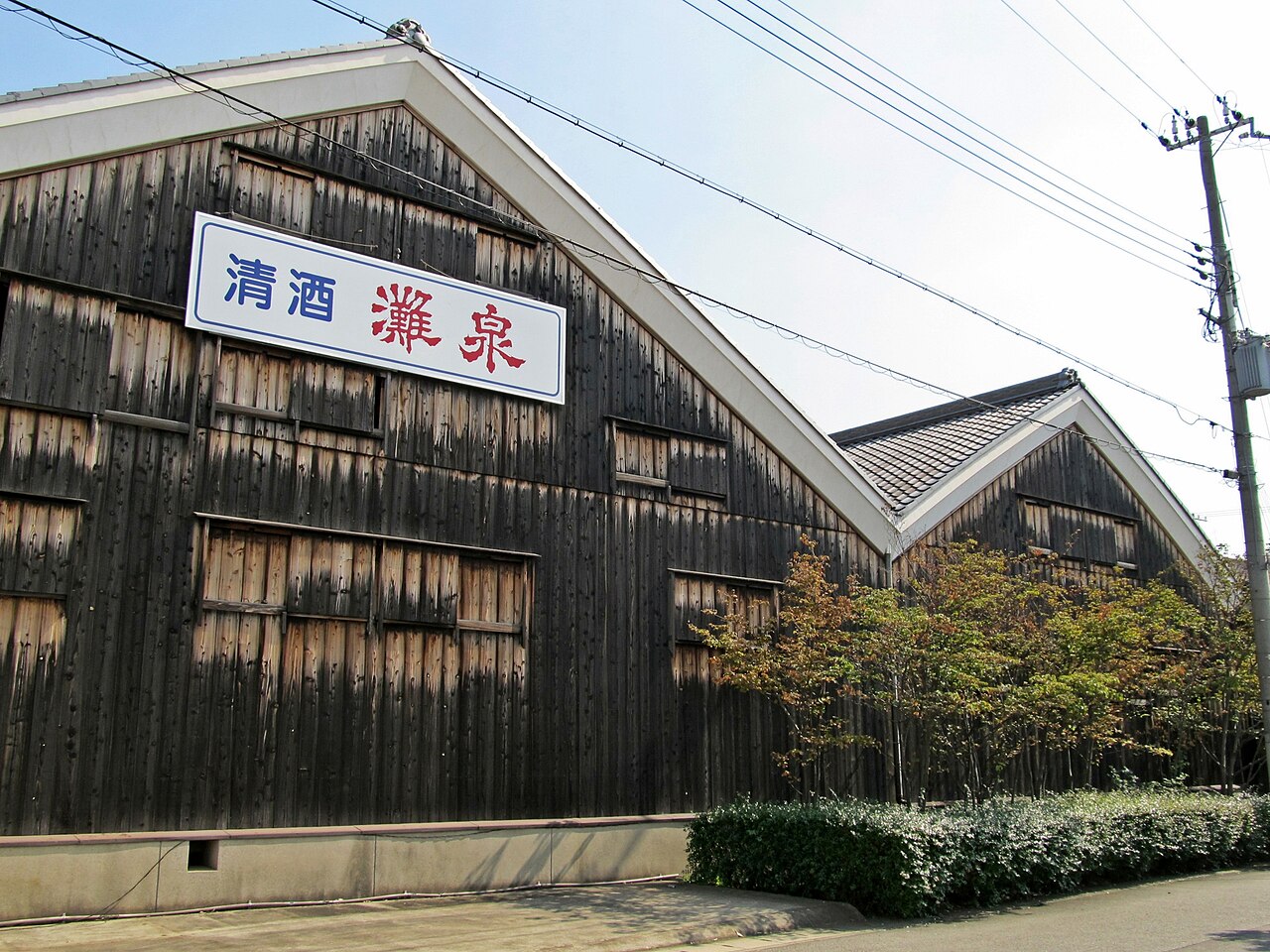
Japan's greatest sake-brewing district — five historic villages of Nada whose breweries make a quarter of the nation's sake.
Nada Gogo — the 'five villages of Nada' — is the beating heart of Japanese sake, a coastal belt stretching from the eastern edge of Kobe into neighbouring Nishinomiya where the country's largest concentration of breweries produces roughly a quarter of all the sake made in Japan. For anyone who loves the national drink, or simply wants to understand it, spending a half-day walking the district is one of the most rewarding experiences in the Kobe area.
The five villages — Nishinomiyago, Mikagego, Uozakigo, Nishigo and Imazugo — grew into a brewing powerhouse over the Edo period thanks to a rare combination of natural advantages. The mineral-rich Miyamizu spring water, discovered here in 1840, is prized for the crisp, dry sake it yields; top-grade Yamada Nishiki rice is grown in the nearby Hyogo hills; cold, dry winds sweeping down from the Rokko mountains create ideal winter fermentation conditions; and the coastal location once allowed breweries to ship their sake by sea directly to Edo, the vast market of old Tokyo. Together these gave Nada an unrivalled edge, and its 'otoko-zake' (masculine sake) — dry, firm and food-friendly — became the benchmark of the age.
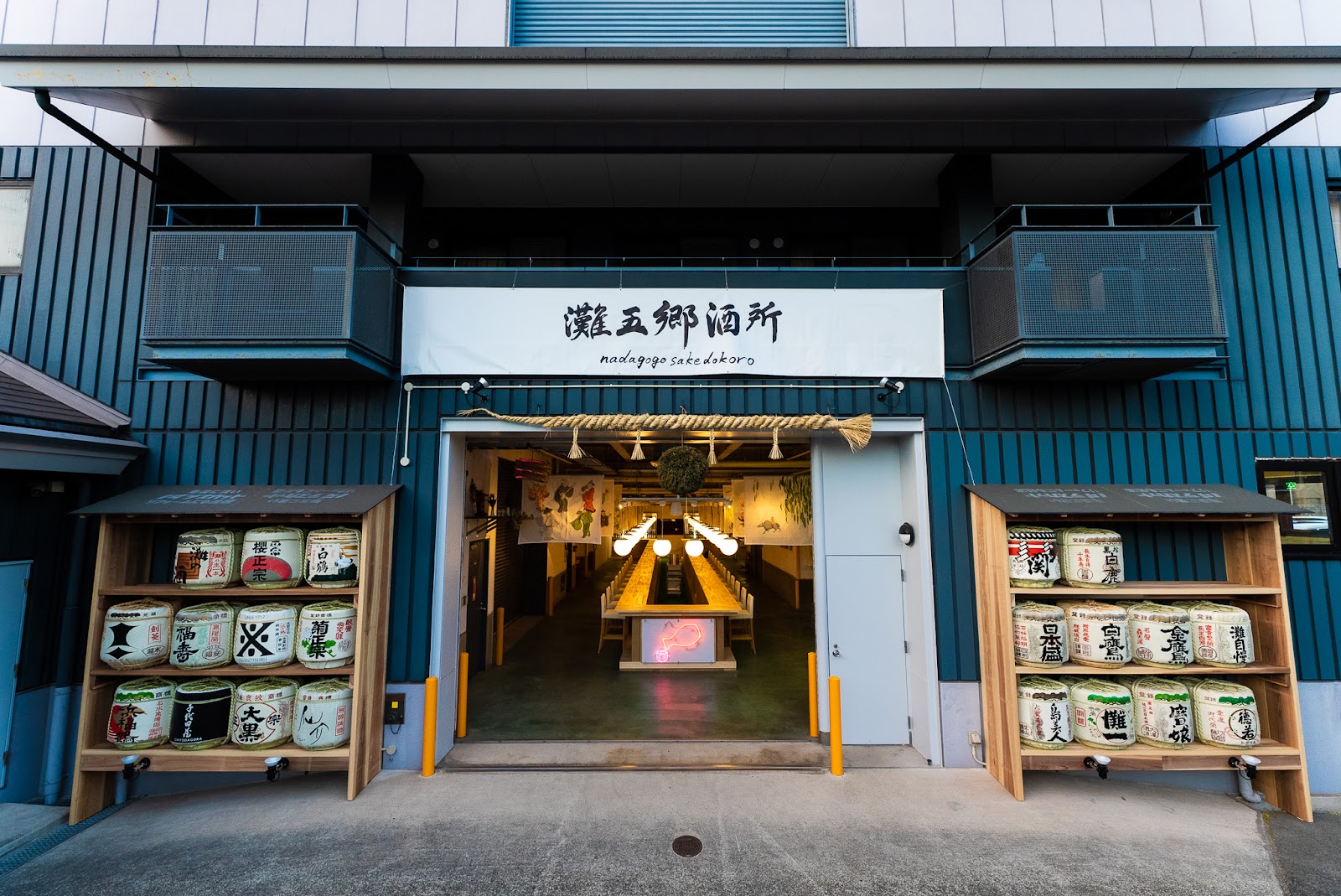
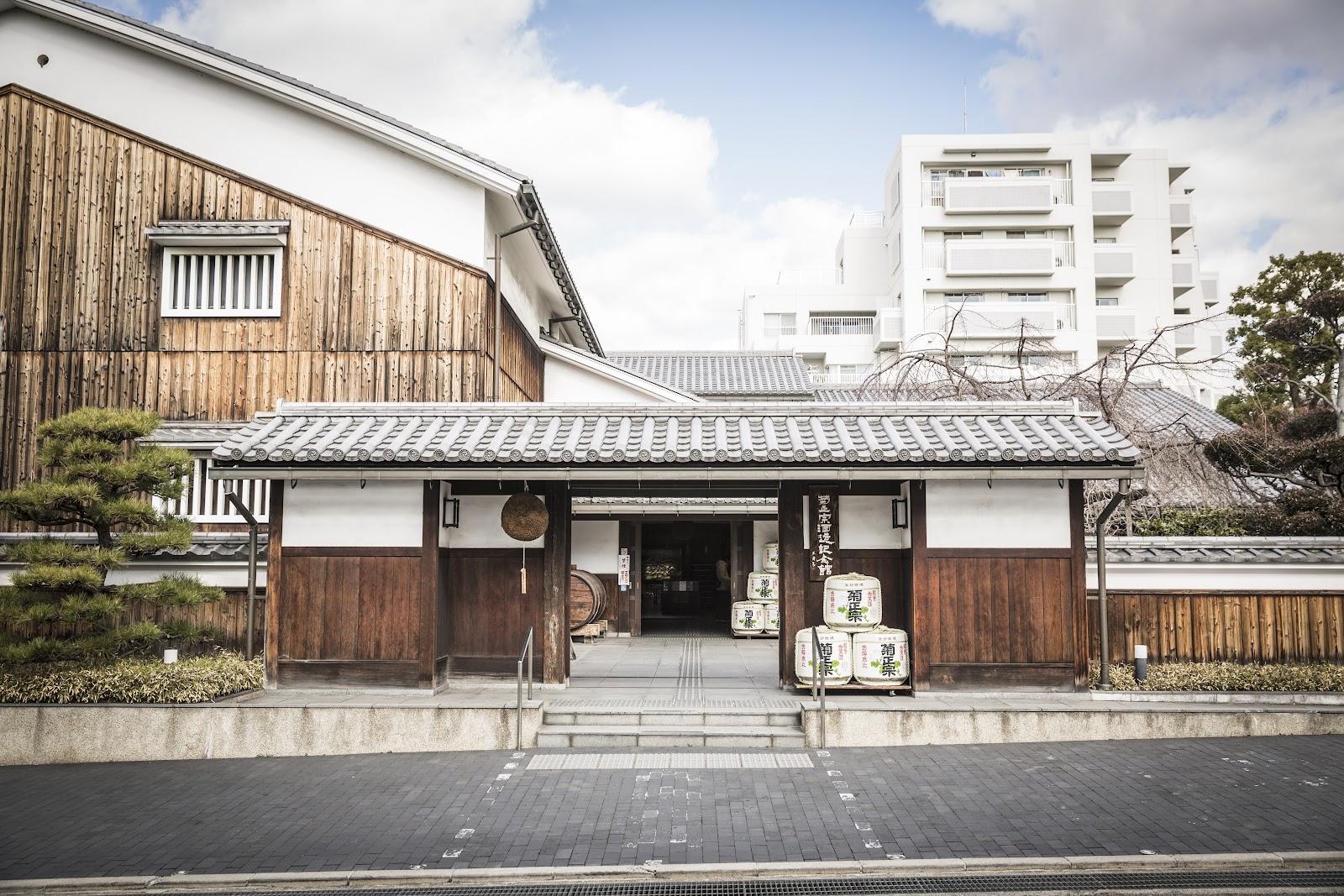
Today the district is home to famous names including Hakutsuru, Kiku-Masamune, Sawanotsuru, Kikumasamune, Sakura Masamune, Hakushika and Ozeki, many of which run free brewery museums and tasting halls open to the public. Several of these preserve or reconstruct traditional wooden kura and walk visitors through the brewing process before offering complimentary samples, making it possible to string together a self-guided sake trail on foot, moving from one hall to the next along the flat coastal streets. A free 'Nada Gogo' tourism map, available at the breweries, marks a convenient walking loop.
The district is not a manicured tourist attraction but a living industrial landscape, where modern bottling plants sit beside heritage buildings, and that authenticity is part of its appeal. Winter, the traditional brewing season, is the atmospheric time to visit, when the air carries the scent of steaming rice and fresh seasonal sake — including unpasteurised namazake and just-pressed shiboritate — appears at the tasting counters. Many breweries also sell exclusive bottles you cannot find elsewhere, and some have restaurants serving dishes designed to pair with their sake.
Getting around is easy: base yourself at JR Sumiyoshi (covered by the Japan Rail Pass) or any of the Hanshin line stations that thread the district, and walk between breweries, using IC cards for any short hops. Individual museums are generally open from mid-morning to late afternoon and closed around the New Year; check hours before setting out, as they vary.
Allow at least half a day, and pace your tastings sensibly. Whether you are a serious sake enthusiast or a curious first-timer, Nada Gogo offers something no bottle abroad can: the chance to taste Japan's most celebrated sake at its source, in the district that has defined the drink for centuries, all while walking through the very landscape that made it possible.
A local's tip
Pick up the free Nada Gogo sake-tourism map at any brewery museum — it marks a walkable loop linking the main tasting halls in a half-day.
Best time to visit
Winter, the traditional brewing season
Getting there
The district stretches along the coast of Nada and Higashinada wards between Nishinomiya and central Kobe; base yourself at JR Sumiyoshi or a Hanshin-line station and walk between breweries.
Good to know
- Shops
- Tasting
- Restrooms
Plan the whole trip offline
Nada Gogo Sake District is one of many places in the Real Japan app — with turn-by-turn directions, nearby spots and full offline maps you can use with no signal.