A large, hilly suburban park north of Osaka whose open-air museum preserves a dozen genuine thatched farmhouses from across Japan.
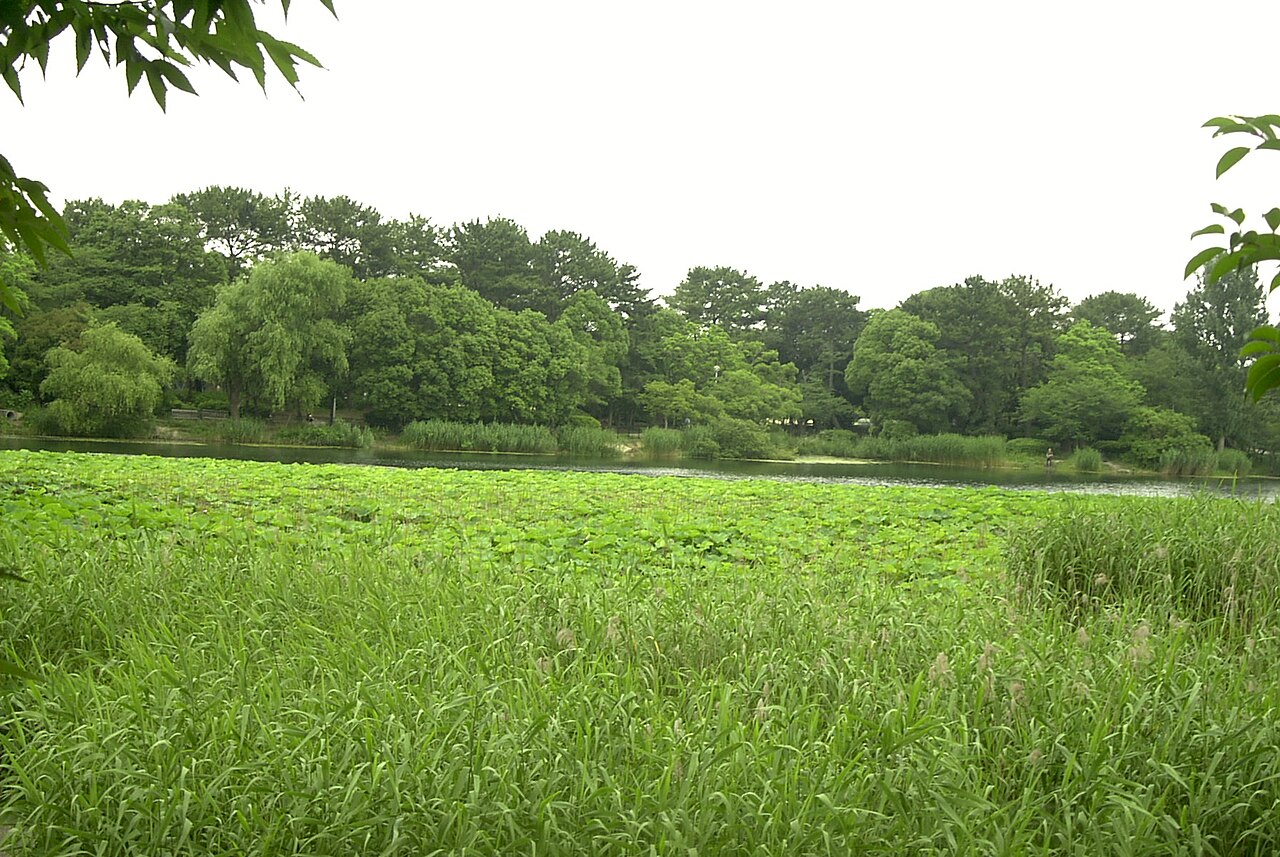
Hattori Ryokuchi Park is a large, gently hilly park in Toyonaka, a suburb in the northern reaches of the Osaka metropolitan area. Beloved by local families, it combines broad lawns, wooded slopes, ponds, sports grounds and gardens across a spacious site, but its standout attraction, and the reason it earns a place on any traveller's map, is the remarkable Open-Air Museum of Old Japanese Farmhouses set within its grounds.
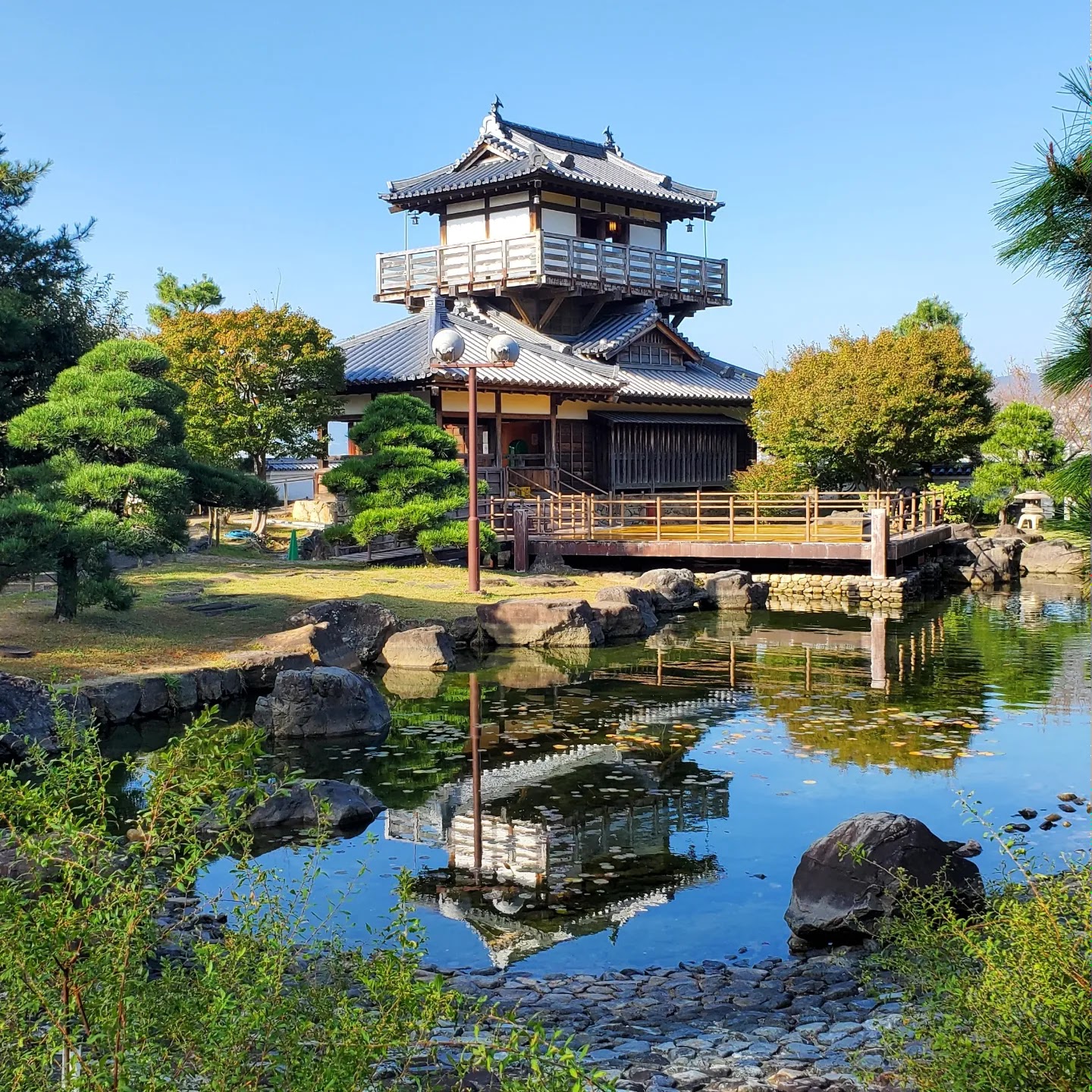
The museum, known in Japanese as Nihon Minka Shuraku Hakubutsukan, gathers around a dozen traditional rural houses that were carefully dismantled at their original locations across Japan and reconstructed here on a forested hillside. The collection spans regions and building styles, from a steeply thatched gassho-zukuri farmhouse of the snowy Hida-Shirakawago district to houses from Kyushu, the Seto Inland Sea islands and the Tohoku north, along with a village kabuki stage. Wandering among them, past irori hearths, dark timber interiors and towering thatched roofs, gives a vivid sense of how ordinary people lived across pre-modern Japan, an experience quite different from the temples and castles of the standard itinerary.
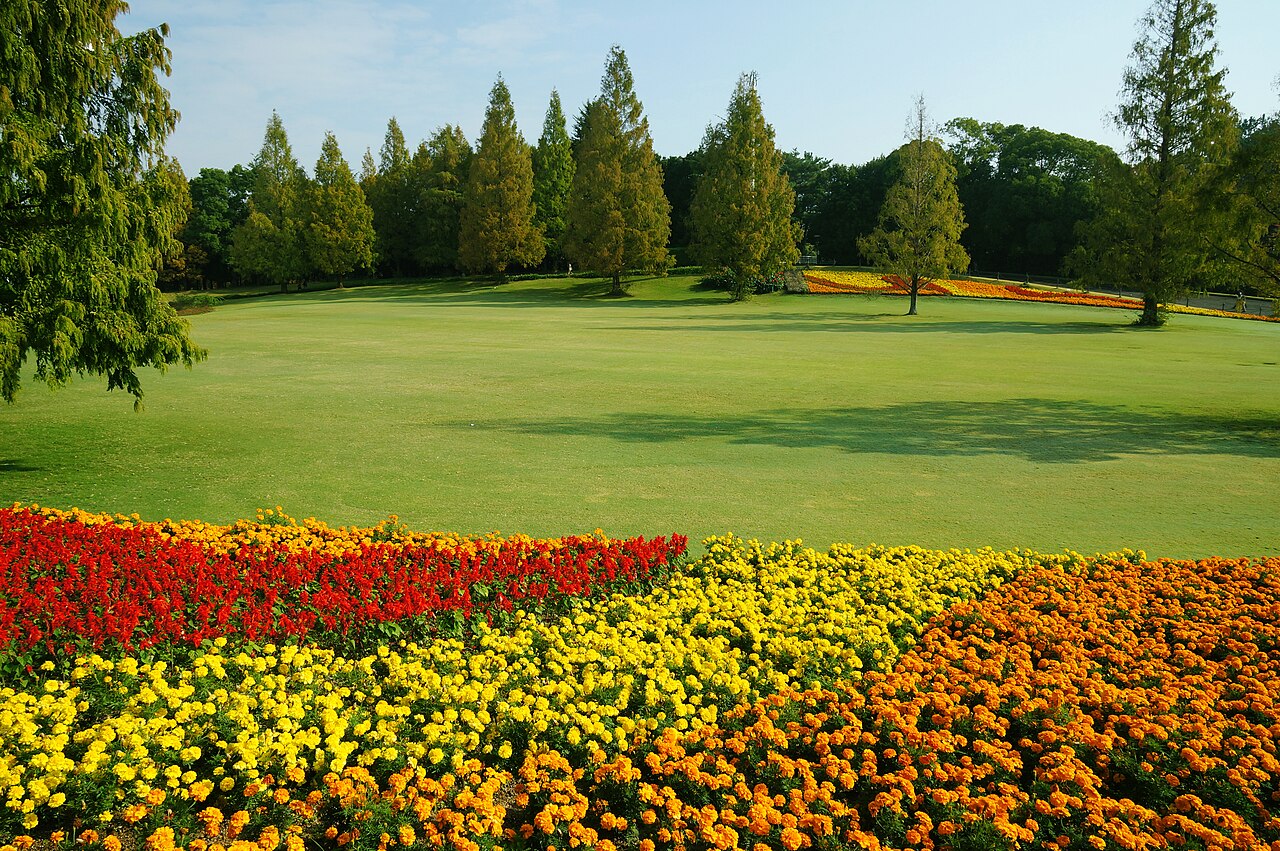
Beyond the museum, the wider park is a genuine local green lung. Cherry trees make it a popular hanami spot in spring, autumn brings warm foliage to the wooded hills, and there are rose and iris gardens, a large pond, cycling paths, an equestrian area and open fields where families picnic and children play. It is the kind of place where you see everyday Osaka life at leisure rather than tour groups.
The visiting experience blends an easy nature walk with a cultural highlight. The park itself is free and open at all hours; the farmhouse museum charges a modest admission and keeps daytime hours, closing on Mondays. Paths through the park are mostly gentle, though the museum's hillside setting involves some slopes and steps around the older buildings. Allow around two and a half hours to combine a stroll with a thorough visit to the farmhouses.
The best time to visit is spring for the cherry blossoms or autumn for the foliage, when the park is at its most photogenic; the farmhouse roofs look especially striking framed by blossom or red maples. Weekdays are quietest, and a fine, dry day makes the outdoor museum far more enjoyable.
Getting there is simple by subway. Ryokuchikoen Station lies directly on the Osaka Metro Midosuji Line, which through-runs onto the Kita-Osaka Kyuko Line to reach it, north of the city centre; from the station the park entrance is about a five-minute walk, with the farmhouse museum in the northern half of the grounds. These lines are not covered by the Japan Rail Pass but accept ICOCA and other IC cards.
A local's tip
Head straight for the Open-Air Museum of Old Japanese Farmhouses, where a dozen genuine thatched rural houses were dismantled from across Japan and rebuilt in a wooded hillside; it is one of the Kansai region's most atmospheric and least crowded cultural experiences.
Best time to visit
Spring for cherry blossoms; autumn for foliage
Getting there
Ryokuchikoen Station is directly on the Midosuji subway line (through-running to the Kita-Osaka Kyuko Line) north of central Osaka; the park entrance is about a 5-minute walk, and the open-air farmhouse museum sits within the park's northern half.
Good to know
- Cafe
- Restrooms
Plan the whole trip offline
Hattori Ryokuchi Park is one of many places in the Real Japan app — with turn-by-turn directions, nearby spots and full offline maps you can use with no signal.