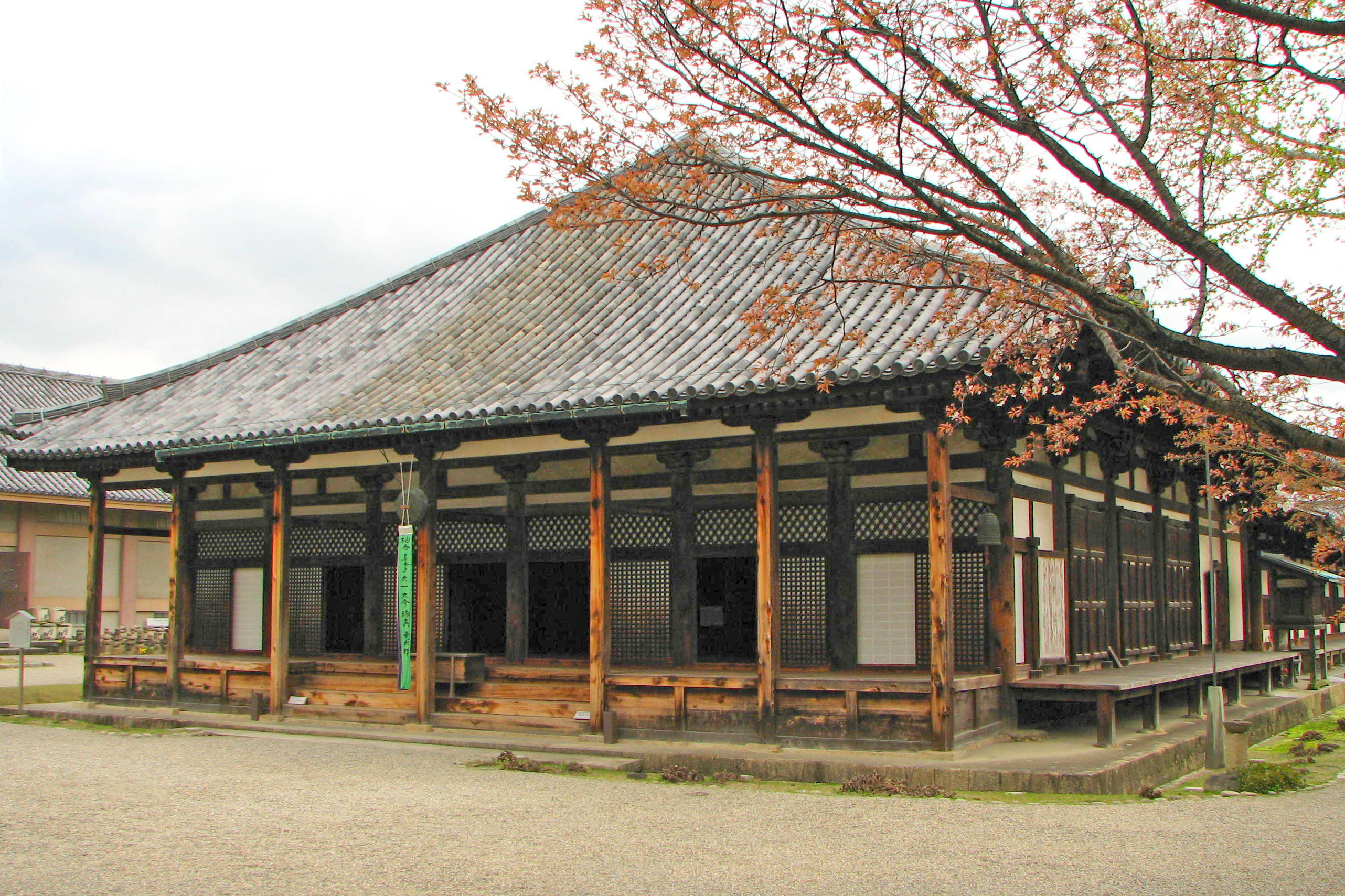
One of Japan's very first temples, hidden in the old Naramachi quarter, with a roof of 1,400-year-old tiles.
Gango-ji is one of the oldest Buddhist temples in Japan, and today it hides in plain sight amid the atmospheric merchant lanes of Naramachi. Its origins reach back to Asuka-dera, founded in 593 by the powerful Soga clan in the earlier Asuka capital, which makes it a direct descendant of the very first full-scale Buddhist temple ever built in the country. When the capital moved to Heijo-kyo in 710, the temple was relocated to Nara and renamed Gango-ji, and it grew into one of the great Nanto Shichi Daiji, the Seven Great Temples of the ancient city, its precinct once sprawling across what is now the entire Naramachi district.
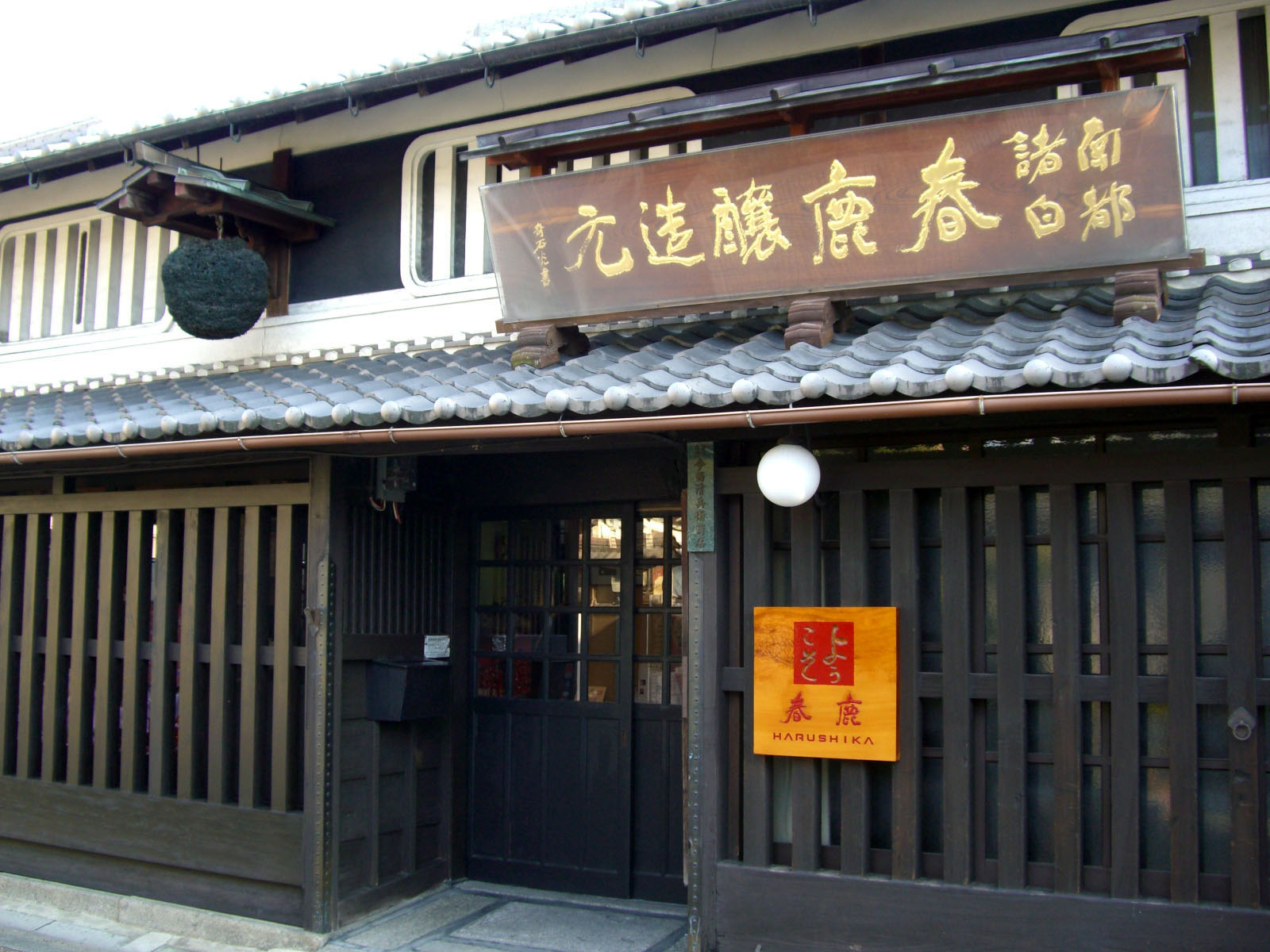
That scale is long gone. Much of the temple was destroyed during the turbulent Muromachi period, and the old town gradually filled the empty ground, so that today the machiya townhouses and craft shops of Naramachi literally sit on former temple land. What survives are three small fragments, each now a separate temple, of which the most rewarding to visit is the Gokurakubo. Its modest main hall and adjoining monks' quarters (zenshitsu) are both National Treasures, quietly beautiful buildings that reward a slow, close look.
The single most remarkable detail is on the roof. Some of the clay tiles covering the Gokurakubo were laid in the Asuka period and brought here from the original sixth-century temple, making them the oldest roof tiles in Japan, still weathering the seasons after some 1,400 years. Their soft, uneven reddish-brown patina stands out clearly against the newer grey tiles around them, a tangible thread running back to the dawn of Japanese Buddhism. Inside, a small museum displays a five-story miniature pagoda, itself a National Treasure, along with statuary and relics that tell the temple's long story.
Gango-ji is inscribed as part of the Historic Monuments of Ancient Nara UNESCO World Heritage Site, yet it receives only a fraction of the visitors who throng Todai-ji and Kasuga Taisha a short distance away. That quiet is part of its charm. The compact grounds, with their stone stupas and seasonal foxtail lilies, can be absorbed in about 45 minutes, and the temple slots naturally into a wider exploration of Naramachi, whose sake shops, cafes and traditional houses make for one of Nara's most pleasant strolls.
Because it lacks the drama of a great pagoda or a colossal Buddha, Gango-ji tends to appeal to travellers who enjoy history and detail over spectacle, and to anyone glad of a peaceful pause away from the deer-filled park. To find it, walk about 15 minutes south from Kintetsu Nara Station into the heart of Naramachi, following the neighbourhood signposts. It is a Kintetsu-served part of the city rather than a JR one, so it is not covered by the Japan Rail Pass, but IC cards work throughout and, once you are in central Nara, everything here is comfortably reached on foot.
A local's tip
Look at the roof of the Gokurakubo main hall: some of its clay tiles are the oldest in Japan, laid in the Asuka period and salvaged from the temple's 6th-century predecessor - a 1,400-year-old roof still doing its job.
Best time to visit
Late morning, combined with a wander through the Naramachi lanes
Getting there
A 15-minute walk south from Kintetsu Nara Station into the old merchant quarter of Naramachi, whose narrow lanes were once part of the temple's vast precinct. Signposts point the way through the neighbourhood.
Good to know
- Restrooms
- Wheelchair access
Plan the whole trip offline
Gango-ji is one of many places in the Real Japan app — with turn-by-turn directions, nearby spots and full offline maps you can use with no signal.